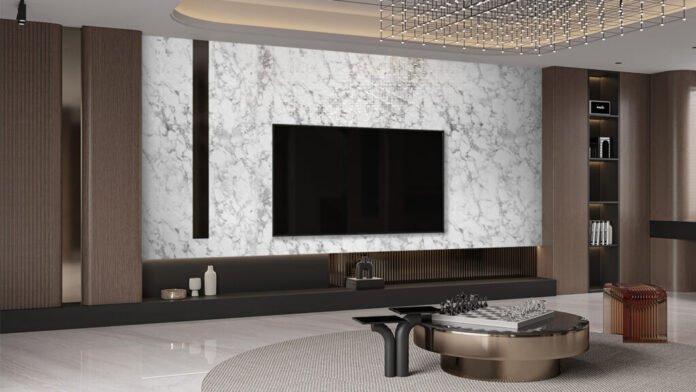


The wall behind your television often ends up being the most-looked-at spot in the entire living room — yet it’s also the one most people leave as an afterthought. A well-planned TV panel design turns that blank wall into the focal point of the room, hides messy wiring, and ties the whole space together. This guide walks through 10 popular TV panel design styles, the materials used to build them, and how to pick the right one for your home and budget.
What Is a TV Panel and Why Does It Matter?
A TV panel (also called a TV back panel or TV unit) is the decorative wall treatment or feature unit installed behind and around a television. Beyond looks, it serves a few practical purposes:
- Hides wires, cables, and set-top boxes for a cleaner look
- Adds texture and depth to an otherwise flat wall
- Can double up as storage — shelves, cabinets, or display units
- Ties the television into the overall room design instead of leaving it looking bolted onto a bare wall
You don’t need a full renovation to get this right — a well-chosen laminate, HPL panel, or textured finish can completely change how the space feels.
10 TV Panel Design Ideas
1. Slatted Wood Panel
Vertical wooden slats set against a darker backing wall — one of the most popular styles right now. It adds warmth and a mid-century modern feel, and the gaps between slats are handy for tucking away cables. Woodgrain laminate or HPL sheets replicate the look of real wood at a fraction of the cost and with much better scratch resistance.
Best for: Medium to large living rooms · Maintenance: Low
2. Backlit Marble Finish
A marble-look panel mounted slightly away from the wall, with LED strip lighting behind it to create a soft glow around the edges. It looks especially striking in the evening and gives an instant luxury, hotel-lobby feel. Marble-finish laminate or HPL delivers the same visual richness without the cost and upkeep of real marble.
Best for: Statement living rooms · Maintenance: Medium
3. Industrial Concrete Finish
A raw, textured grey finish that suits modern, minimalist, or loft-style interiors. Concrete-effect laminate panels are lightweight, easy to install, and far more practical than actual concrete cladding, while still giving that stripped-back urban look.
Best for: Contemporary apartments · Maintenance: Low
4. Matte Black / Charcoal Geometric
Dark, textured panels — sometimes with a geometric or layered pattern — create a bold, cinematic backdrop. The advantage: when the TV is off, it visually blends into the dark wall instead of standing out. Matte-finish charcoal laminates work well here and are easy to maintain.
Best for: Media rooms and home theatres · Maintenance: Low
5. Floor-to-Ceiling Storage Unit
Instead of a purely decorative panel, this design wraps the TV in a full storage system — open shelves, closed cabinets, and display niches built around it. It’s a practical option for smaller Indian homes where storage space is limited, and furniture-grade laminate finishes make the unit durable and stain-resistant.
Best for: Compact homes needing extra storage · Maintenance: Medium
6. Metallic Accents with Mirror Trim
A more glam, Art Deco–inspired approach — laminate or lacquer panels combined with brushed gold, brass, or rose-gold trims, sometimes with mirror inserts. The reflective surfaces help brighten and visually expand smaller rooms.
Best for: Contemporary or upscale interiors · Maintenance: Medium
7. Upholstered Fabric or Leather Panels
Padded, textured panels in fabric or faux leather add softness and a touch of luxury, and they help absorb sound — a nice bonus in a dedicated home theatre setup. Neutral tones keep it subtle; deeper colours make more of a style statement.
Best for: Home theatres · Maintenance: Medium
8. High-Gloss Lacquer Finish
A sleek, reflective surface available in white, grey, black, or bold colours. It brightens the room by bouncing light around and gives a clean, futuristic look. High-gloss laminate achieves a similar shine to lacquer, with better scratch resistance and easier upkeep.
Best for: Minimalist interiors · Maintenance: Low
9. Asymmetric Split Panel
Two contrasting materials — say, warm wood on one side and marble or stone on the other — used on a single wide wall. This breaks up large, flat walls and adds a custom, architectural feel, especially useful when a single uniform panel would look too plain.
Best for: Wide feature walls · Maintenance: Low
10. Textured Earthy Finish (Venetian Plaster-Style)
Warm, textured tones — terracotta, sage green, clay, beige — bring a handmade, organic feel to the space. Textured, matte-finish panels can replicate this look while being far easier to install and maintain than actual plaster work.
Best for: Organic, modern interiors · Maintenance: Medium
Comparing TV Panel Designs at a Glance
| Design Style | Best Room Type | Budget | Maintenance | Common Material |
|---|---|---|---|---|
| Slatted Wood | Medium–large living rooms | Medium | Low | Woodgrain laminate/HPL |
| Backlit Marble | Statement living rooms | High | Medium | Marble-finish HPL |
| Concrete Finish | Modern apartments | Medium | Low | Concrete-effect laminate |
| Matte Black Geometric | Media rooms | Medium–High | Low | Textured laminate |
| Storage Unit | Compact homes | Medium–High | Medium | Furniture-grade laminate |
| Metallic Accents | Contemporary homes | Medium–High | Medium | Metallic laminate |
| Upholstered Panels | Home theatres | High | Medium | Fabric/leather |
| High-Gloss Lacquer | Minimalist interiors | Medium | Low | High-gloss laminate |
| Split Panel | Wide feature walls | Medium–High | Low | Mixed materials |
| Textured Earthy Finish | Organic modern homes | Medium | Medium | Textured panels |
Which Material Should You Use?
| Material | Key Benefit | Durability | Cost | Best For |
|---|---|---|---|---|
| Decorative Laminate | Huge design variety, budget-friendly | High | Low–Medium | Most residential TV units |
| HPL Panels | Extra scratch and impact resistance | Very High | Medium | Premium interiors |
| MDF/Plywood | Fully customizable for storage units | Medium–High | Medium | Built-in storage designs |
| PVC Panels | Lightweight and moisture-resistant | Medium | Low | Budget-conscious projects |
| Natural Stone/Marble | Genuine luxury look | Very High | High | Statement feature walls |
| Concrete/Microcement | Raw, industrial texture | High | Medium–High | Modern minimalist spaces |
For most homes, decorative laminate or HPL hits the sweet spot — you get the look of wood, marble, or metal, without the cost or maintenance headaches of the real material.
How to Choose the Right TV Panel Design
- Match it to your room size – Bold, dark designs work best in larger rooms; lighter, glossy finishes help smaller rooms feel more open.
- Think about lighting – If you want a backlit or LED-accented look, plan for wiring and lighting during installation, not after.
- Factor in maintenance – Glossy and light-coloured finishes show fingerprints and dust more easily than matte or textured surfaces.
- Plan for cable management – Whatever design you choose, make sure there’s a plan for hiding wires, either through slats, a hollow panel, or a cable channel.
- Set a realistic budget – Laminate and HPL-based designs generally offer the best look-to-cost ratio compared to natural stone or fully upholstered walls.
FAQs About TV Panel Design
Q1. Which TV panel design is trending right now? Slatted wood panels, backlit marble finishes, and matte black geometric designs are among the most popular styles for modern living rooms in 2026.
Q2. What laminate finish works best for a TV panel? Woodgrain, matte, marble-finish, and high-gloss laminates are all commonly used, and the right choice depends on your room’s lighting, existing furniture, and how much maintenance you’re willing to do.
Q3. What materials are most commonly used for TV panels in Indian homes? Decorative laminates, HPL sheets, MDF, PVC panels, and occasionally marble or textured wall finishes are the most common choices.
Q4. Is a TV panel expensive to install? It depends heavily on the material and design complexity. Laminate or HPL-based panels are generally the most affordable, while natural stone or fully upholstered designs cost significantly more.
Q5. Can a TV panel help with cable management? Yes — most designs, especially slatted or storage-integrated panels, are built with hidden channels or gaps specifically to route wires and hide set-top boxes.
Q6. How long does a laminate TV panel typically last? With proper installation and basic care, a laminate or HPL TV panel can easily last 10 years or more without losing its finish.
Final Thoughts
The right TV panel design does more than frame a screen — it sets the tone for the entire living room. Whether you’re drawn to the warmth of slatted wood, the drama of backlit marble, or the practicality of a built-in storage wall, there’s a laminate or HPL finish that can bring that look to life at a fraction of the cost of natural materials. Start with your room’s size and lighting, decide how much maintenance you’re comfortable with, and pick a finish that complements the rest of your interior.
Disclaimer: Design trends, material availability, and pricing may vary by brand and region. Consult your interior designer or laminate supplier for project-specific recommendations.