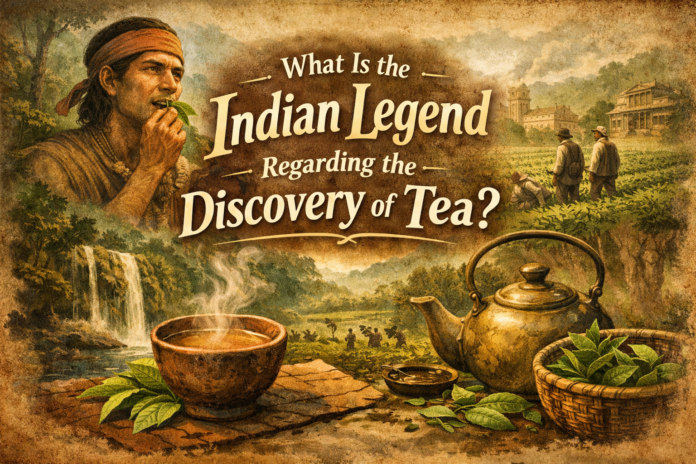

If you ask any Indian what starts their day, chances are the answer will be chai. Not coffee. Not juice. Chai.
It’s poured before sunrise in homes, boiled at roadside stalls, debated over politics, and shared during heartbreaks and celebrations. Tea is not just a drink in India. It’s a habit. A comfort. Almost a companion.
But have you ever paused mid-sip and wondered how tea actually came into our lives? Not the British story we all studied in school, but something older. Something rooted in Indian soil, forests, and folklore.
Long before tea gardens, export records, and porcelain cups, India already had a quiet legend brewing.
Tea Before the Tea Gardens
Most of us grew up hearing that the British introduced tea to India. That story is partly true. They commercialised it. They organised plantations. They turned tea into a global trade.
But tea itself?
That’s where Indian legends step in.
Long before Assam became famous for its tea estates, local tribes in the region were already familiar with the tea plant. They didn’t call it “tea” the way we do today. For them, it was simply a useful leaf.
The forests of Northeast India were rich, wild, and generous. And among the many plants growing there was Camellia sinensis, the same plant that later ruled British teacups.
The Singpho Tribe’s Quiet Knowledge
One of the strongest Indian legends around the discovery of tea comes from the Singpho tribe of Assam and Arunachal Pradesh.
According to local stories passed down through generations, the Singpho people had been using tea leaves long before outsiders noticed their value. They didn’t brew it the modern way. Instead, they:
-
Chewed tea leaves for energy
-
Boiled them as herbal drinks
-
Used them as medicine for fatigue and digestion
For the Singpho, tea wasn’t a luxury. It was survival.
Imagine forest life centuries ago. Long walks. Hunting. Farming. Cold mornings. A leaf that kept you alert and warm would naturally become part of daily life. No fancy cups. No milk. Just leaves and water.
This is one of the earliest Indian tea legends that still feels believable because it’s practical, not dramatic.
A Leaf That Gave Strength
There’s an old story often shared in Assam villages.
Hunters would chew tea leaves before long journeys. It reduced hunger. Gave stamina. Kept sleeping away. When the elders noticed its effect, the habit spread. Slowly, tea leaves became part of tribal culture.
No one thought of it as a “discovery”. It was simply nature offering help.
This is where the Indian legend differs from Chinese or European stories. There is no accident, no falling leaf into boiling water. Just observation, experience, and respect for the land.
Tea as Traditional Medicine
In many parts of Northeast India, tea leaves were used like Ayurvedic herbs.
-
For headaches
-
For tired bodies
-
For digestion
-
For warmth in cold weather
Even today, some families in Assam prepare raw tea leaf brews, especially during illness. It’s bitter, strong, and nothing like masala chai. But it works.
This connection between tea and wellness is often ignored, but it strengthens the belief that Indians knew tea long before colonial times.
When the British Finally Noticed
By the early 19th century, British officials were desperate to break China’s monopoly over tea. During forest surveys in Assam, they noticed locals consuming tea leaves.
That moment changed everything.
What was once a tribal habit soon became a commercial product. Tea plantations spread. Processing methods changed. Milk and sugar entered the cup. And tea slowly transformed from a forest leaf into a national drink.
But the legend remains. Quietly reminding us that tea didn’t arrive with ships. It was already waiting here.
Why This Indian Tea Legend Matters
This story matters because it shifts perspective.
Tea in India is often linked only to colonial history. But the Indian legend shows something deeper:
-
Indigenous knowledge existed
-
Forest communities understood plants long before modern science
-
Tea was part of Indian culture in its raw form
It also reminds us how often tribal wisdom goes unrecorded and later gets “rediscovered” by outsiders.
Next time you sip chai at a roadside stall, remember that it began far away from steel kettles and gas stoves.
It began in forests.
Tea, Emotion, and Everyday Life
Even today, tea connects Indians emotionally.
A tired office worker waits for the 4 pm tea break.
A farmer rests with a steel cup after sunrise work.
A student studies better after chai.
Families bond over evening tea and gossip.
That emotional connection didn’t start with marketing. It grew slowly, leaf by leaf, generation by generation.
And legends like the Singpho story explain why tea feels so natural to us. As if it always belonged here.
FAQs: People Also Ask
Did India really discover tea before the British?
India didn’t commercialise tea before the British, but local tribes like the Singpho were already using tea leaves for centuries in Assam and nearby regions.
What is the Indian legend of tea discovery?
The most popular Indian legend says that tribal communities in Northeast India discovered the tea plant naturally and used it for energy, medicine, and daily life.
Is the tea plant native to India?
Yes. Assam has indigenous tea plants. This proves that tea was not entirely imported into India.
How did Indians consume tea originally?
Early consumption involved chewing leaves, boiling them in water, or using them as herbal remedies, without milk or sugar.
Why is Assam important in tea history?
Assam is home to native tea plants and tribal communities who knew about tea long before colonial plantations were set up.
Tea has travelled a long way. From forest leaves to clay cups, from tribal wisdom to global trade.
But at its heart, tea in India is still simple. A pause. A breath. A moment of warmth.
And somewhere behind every cup of chai is an old legend, quietly smiling, reminding us that some discoveries don’t need credit. They just need respect.