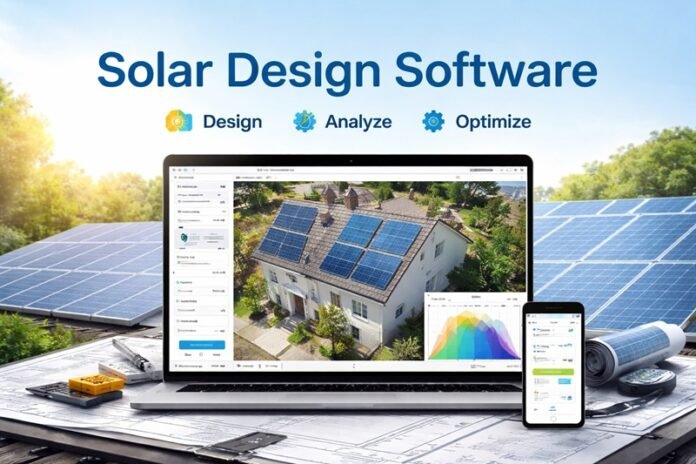


The solar industry has become increasingly competitive, requiring installers to deliver accurate designs, professional proposals, and faster project turnaround times. As customer expectations continue to rise, solar businesses need tools that simplify complex workflows while maintaining precision. This is where solar design software plays a crucial role.
Solar design software helps solar professionals create accurate system layouts, evaluate site conditions, analyze shading, estimate energy production, and generate installation-ready plans. By replacing manual calculations and disconnected workflows, these platforms allow installers to improve efficiency, reduce errors, and accelerate project completion. Modern solutions such as Solargraf combine design, proposal generation, financing, and permitting capabilities into a single platform.
What Is Solar Design Software?
Solar design software is a specialized digital tool used to plan and optimize solar photovoltaic (PV) systems. These platforms help installers determine the ideal system size, panel placement, energy production estimates, and project economics before installation begins.
Instead of relying on spreadsheets and manual roof measurements, installers can use advanced software to generate highly accurate designs using aerial imagery, LiDAR data, artificial intelligence, and automated calculations.
Why Solar Installers Need Solar Design Software
The design phase directly impacts system performance, installation efficiency, and customer satisfaction. Even minor design errors can lead to reduced production, installation delays, and increased costs.
Solar design software helps businesses:
- Improve design accuracy
- Reduce engineering workload
- Accelerate proposal creation
- Minimize site visits
- Increase installation efficiency
- Enhance customer confidence
- Scale operations more effectively
By automating repetitive tasks, solar companies can focus more on sales and project execution while maintaining consistent design quality.
Key Features of Advanced Solar Design Software
Automated Roof Detection
Modern solar design software can automatically identify roof boundaries and usable installation areas using aerial imagery and AI-powered analysis.
Benefits include:
- Faster site assessments
- Improved measurement accuracy
- Reduced manual design work
- More consistent system layouts
Auto-roof detection significantly reduces the time required to create solar designs while improving overall precision.
Intelligent Shading Analysis
Shading is one of the most important factors affecting solar production. Advanced solar software uses sophisticated algorithms to evaluate shading throughout the year.
These tools provide:
- Solar access calculations
- Production loss estimates
- Visual heatmaps
- Roof irradiance analysis
- Obstruction detection
Accurate shading analysis helps installers identify optimal panel placement and maximize system performance. Solargraf’s shading tools generate visual heatmaps and automated shading calculations to support better design decisions.
AI-Powered Panel Placement
Artificial intelligence is helping installers design systems faster than ever before.
AI-assisted design capabilities include:
- Automatic panel placement
- Obstruction detection
- Roof segmentation
- Layout optimization
- Production-based design recommendations
These features reduce manual effort while improving design consistency and efficiency.
High-Precision Production Modeling
Customers expect accurate information about how much energy their solar system will generate.
Solar design software can calculate:
- Annual energy production
- Utility bill savings
- Consumption offset
- Return on investment
- Battery performance scenarios
Advanced production engines use weather data, shading information, and site characteristics to generate realistic forecasts.
3D Visualization and Modeling
Three-dimensional visualization helps installers and customers better understand proposed system layouts.
Benefits include:
- Improved project planning
- Better customer engagement
- More accurate roof modeling
- Enhanced proposal presentations
Modern solar software increasingly uses LiDAR-assisted modeling and advanced imagery to improve visualization accuracy.
How Solar Design Software Improves Business Performance
Faster Proposal Turnaround
Speed is often a competitive advantage in solar sales. Automated design tools allow installers to create proposals much faster than traditional methods.
Faster proposal delivery helps businesses engage customers while interest levels remain high.
Increased Accuracy
Automated calculations and AI-driven analysis reduce the likelihood of human error, resulting in more reliable designs and better project outcomes.
Lower Soft Costs
Reducing engineering hours, minimizing site visits, and streamlining project planning can significantly lower operational expenses.
Better Customer Experience
Customers appreciate clear visualizations, transparent production estimates, and professional proposals. These factors help build trust and improve conversion rates.
Why Solargraf Is a Popular Solar Design Software Solution
Solargraf has become a widely used platform because it combines multiple workflows into a single system. Rather than using separate tools for design, proposals, financing, and permitting, installers can manage the entire process from one platform.
Key capabilities include:
AI-Driven Design Automation
The platform uses AI-powered tree and obstruction detection to simplify system design and improve accuracy.
Automated Panel Placement
Installers can automatically generate optimized panel layouts based on project requirements and energy goals.
Advanced Shading Engine
Solargraf performs detailed shading calculations and generates visual heatmaps that support better design decisions.
Integrated Proposal Generation
Designs can be converted into professional proposals that include savings estimates, financing options, and customer-friendly visualizations.
Permit-Ready Documentation
The platform also supports permit generation and compliance-focused workflows, helping installers reduce project delays.
How to Choose the Right Solar Design Software
When evaluating solar design software, consider the following factors:
Design Accuracy
Look for software with advanced shading analysis, production modeling, and automated calculations.
Ease of Use
The platform should be simple enough for sales teams while providing the advanced functionality engineers require.
Automation Features
AI-powered tools can dramatically improve productivity and reduce manual work.
Proposal Integration
Combining design and proposal generation helps streamline sales workflows.
Permitting Support
Integrated permitting tools can reduce administrative effort and accelerate approvals.
Scalability
Choose a solution that can support business growth and increasing project volumes.
The Future of Solar Design Software
The next generation of solar design software will continue incorporating artificial intelligence, machine learning, and workflow automation.
Future innovations are expected to include:
- Fully automated system design
- Enhanced battery modeling
- Real-time production optimization
- Advanced LiDAR-based roof analysis
- Automated permitting workflows
- Improved CRM and financing integrations
These advancements will help installers design systems faster, improve accuracy, and deliver better customer experiences.
Conclusion
Solar design software has become an essential technology for solar installers seeking greater efficiency, accuracy, and scalability. From automated roof detection and shading analysis to proposal generation and permitting support, these platforms simplify every stage of the solar project lifecycle.
Solutions such as Solargraf demonstrate how modern solar design software can help businesses reduce costs, improve customer satisfaction, and accelerate growth. As solar adoption continues to expand globally, investing in advanced solar design software will remain a critical advantage for installers looking to stay competitive in a rapidly evolving market.