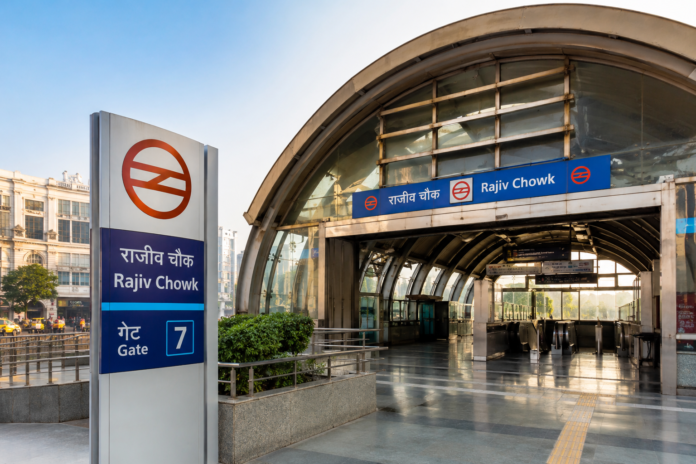


Location: Block B, Connaught Place, New Delhi, Delhi 110001
Lines Served: Blue Line and Yellow Line (major interchange station)
Daily Passengers: ~216,000 commuters (2nd busiest station)
Entry/Exit Gates: 8 gates serving different CP areas
Operating Hours: 5:21 AM to 11:40 PM
Train Frequency: Every 2-3 minutes (peak), every 3-4 minutes (off-peak)
Status: Fully underground, 39,503 sq ft, best-equipped station
Operator: Delhi Metro Rail Corporation Limited (DMRC)
This quick overview answers the most common questions instantly. Bookmark this section for quick reference before every visit.
Introduction
You’re standing at the entrance of one of Delhi’s most chaotic, vibrant, and absolutely essential transportation hubs. Welcome to Rajiv Chowk Metro Station. Whether you’re catching a morning train to Noida, meeting a client in Gurgaon, grabbing lunch between appointments, or just trying to figure out how to get to the airport without getting lost, this station is probably part of your journey.
Here’s the truth: Rajiv Chowk isn’t just another metro stop. It’s the lifeline connecting millions of Delhiites across the city. With over 216,000 passengers passing through daily, it’s the second busiest station on the entire Delhi Metro network. Located right beneath the heart of New Delhi in Connaught Place, this station has become synonymous with Delhi’s pulse.
But navigating Rajiv Chowk can feel overwhelming if you don’t know the ropes. Which gate do you use? How do you transfer between the Blue and Yellow lines without losing 20 minutes? Where can you actually grab decent food without missing your train? That’s exactly why SuperBlogMedia has created this comprehensive guide.
We’ve researched, interviewed regular commuters, and tested routes to give you practical information that actually works. This isn’t just a factual reference. This is your personal guide to mastering Rajiv Chowk Metro Station.
Getting to Rajiv Chowk Metro Station
Reaching Rajiv Chowk by Delhi Metro
If you’re already on the Delhi Metro network, reaching Rajiv Chowk is straightforward. The station serves two major lines making it one of the most connected points in the entire system.
For the Blue Line: If you’re traveling from Noida, Vaishali, or Dwarka side, simply follow signs for the Blue Line. The station receives trains from both directions at platforms 3 and 4 (upper level). If you’re coming from Dwarka Sector 21, expect about 30 to 35 minutes of travel time.
For the Yellow Line: Travelers from Gurgaon (HUDA City Centre) or Samaypur Badli in North Delhi use the Yellow Line. These trains arrive at platforms 1 and 2 (lower level). The entire Yellow Line runs north-south through Delhi, so depending on your boarding point, travel time varies from 5 minutes to 40 minutes.
The beauty of Rajiv Chowk is that you can switch between these two lines here, making it possible to reach almost any part of Delhi without returning to another interchange station.
The Eight Entry and Exit Gates: Choose Wisely
Here’s something most guides don’t tell you: choosing the right gate can save you 5 to 10 minutes of walking. Each of Rajiv Chowk’s eight gates opens to different areas of Connaught Place and nearby landmarks. Pick the wrong one, and you’ll be wandering through unfamiliar streets.
Gate 1: Radial Road-3, Panchkuian Road, B Block, Minto Road. This is your gateway if you’re heading toward the western part of CP or government offices on Radial Road.
Gate 2: PVR Plaza direction. Movie lovers and shoppers heading to Central Park shopping mall should use this gate. It’s also the closest to some of the premium office spaces.
Gate 3: D Block, Carnival Cinema (Odeon). Use this if you’re targeting shops in D block or the Odeon cinema area, though Odeon is now closed.
Gate 4: E Block, Barakhamba Road, Kasturba Gandhi Road. This gate connects you to the eastern shopping areas and several corporate offices on Barakhamba Road.
Gate 5: Radial Road-1, Janpath Road, F Block. Janpath is a shopper’s paradise for budget options. If you’re looking for affordable clothing, accessories, or electronics, this gate is your entry point.
Gate 6: Radial Road-1, Janpath Road, Palika Bazar. Another Janpath connection. Palika Bazar is directly accessible from here, perfect for budget electronics and mobile phone accessories.
Gate 7: Radial Road-2, Baba Kharak Singh Marg, A Block. This connects to the northern shopping sections and A block retail outlets.
Gate 8: Radial Road-3, Panchkuian Road, A Block. Similar to Gate 7, this serves the northern part of the station area.
SuperBlogMedia recommends saving a screenshot of these gates on your phone. When you’re exiting after your first visit, you’ll thank yourself.
Reaching Rajiv Chowk by Road
If you’re arriving by auto-rickshaw or taxi, tell the driver “Rajiv Chowk Metro Station” and specify which gate based on where you need to go. Most drivers know the major metro stations, but they might not know the gate system.
Auto-rickshaws: Several auto stands operate around Connaught Place. The stands near Central Park (Gate 2) and Janpath Road (Gates 5 and 6) are well-organized. Expect to pay anywhere from Rs. 30 to Rs. 80 depending on your starting point within Delhi.
Uber and Ola: Both apps show pickup and drop locations around the metro station. If you’re using a cab, request drop near Gate 2 or Gate 4 as these areas have smoother traffic flow during peak hours. During evening rush (5 to 8 PM), drop-offs can take longer due to traffic congestion around Connaught Place.
Buses: Several Delhi Transport Corporation (DTC) and cluster buses pass through Connaught Place. Bus stops are located at various gates, though using buses to reach the metro can be slower than auto-rickshaws during peak hours.
Reaching Rajiv Chowk from Major Delhi Landmarks
From New Delhi Railway Station: The quickest route is to take the Yellow Line metro directly. Exit New Delhi station, go to the platform, board any Yellow Line train northbound, and you’ll reach Rajiv Chowk in just 5 minutes. Total journey time including walking: 10 to 12 minutes.
From Indira Gandhi International Airport: This is trickier and requires a transfer. Take the Airport Express from the airport to New Delhi station (about 20 to 23 minutes). Then switch to the Yellow Line northbound. Total time: 50 to 60 minutes plus waiting times. Cost: Rs. 160.
From Chandni Chowk: If you’re in Old Delhi exploring the spice markets or Jama Masjid, the Yellow Line going southbound takes you directly to Rajiv Chowk in 5 minutes. It’s faster than any taxi.
From South Delhi landmarks: Reaching Qutub Minar from Rajiv Chowk requires two transfers. Take Yellow Line to Central Secretariat, then switch to Violet Line toward Badarpur, and get off at Qutub Minar. This takes about 20 minutes total.
SuperBlogMedia tip: Save these routes in your Google Maps with the metro option selected. It gives real-time updates about train arrivals and delays.
Rajiv Chowk Metro Station Layout and Platforms
Two Levels, Two Completely Different Lines
Rajiv Chowk is unique in Delhi’s metro system because it’s a true interchange station with two separate levels. The Yellow Line operates on the lower level (Level 2) and the Blue Line on the upper level (Level 1). This design means trains never overlap, but it also means you need to know which level you’re heading to.
When you enter the station through any gate, you’ll come to the main concourse area on Level 1. Here’s where you’ll find fare control, ticketing machines, and directional signage. Clear signage indicates whether you need to go down for Yellow Line or stay at this level for Blue Line.
The upper level serves the Blue Line with two platforms. Platform 3 handles trains going toward Noida Electronic City and Vaishali (eastbound). Platform 4 handles trains going toward Dwarka Sector 21 (westbound). Between these platforms, you’ll find escalators, lifts, and a small waiting area with seating.
The lower level serves the Yellow Line with two platforms. Platform 1 handles trains going toward HUDA City Centre in Gurgaon (southbound). Platform 2 handles trains going toward Samaypur Badli in North Delhi (northbound). The lower level has its own ticketing machines and a separate concourse area.
Both levels are connected by escalators, lifts, and stairs. During our visits, we noticed the lifts are particularly helpful during peak hours when stairs get overcrowded.
The Blue to Yellow Transfer: Your 2-3 Minute Challenge
One question SuperBlogMedia gets constantly: “How do I transfer from Blue to Yellow without getting completely lost?”
Here’s the practical process. If you’re coming off a Blue Line train at Platform 3 or 4, follow the “Yellow Line” signage on the platform. You’ll see arrows pointing toward the stairs or escalators. Take either option (escalators are faster during non-peak times, but stairs are sometimes quicker during peak hours when escalators have lines).
The actual walking distance between platforms is about 200 to 250 meters. During non-peak hours, this takes 2 to 3 minutes. During peak evening hours (6 to 7:30 PM), when the station is packed, allow an extra 1 to 2 minutes because you’ll be moving slower with the crowd.
A SuperBlogMedia commuter shared this hack with us: “If you’re transferring during peak hours, walk toward the end of the train. The rear coaches have lighter crowds, and you’ll exit near stairs that are less congested than the central ones.”
Station Amenities on Both Levels
Each level has its own set of facilities. The upper level (Blue Line) has 3 ATMs from different banks, 2 phone charging stations, and small retail kiosks selling newspapers, snacks, and metro passes. Restrooms are located here too, though they can get crowded during peak hours.
The lower level (Yellow Line) mirrors these facilities with additional food kiosks. We counted at least 5 small vendors selling chai, samosas, and packaged snacks. This level tends to be slightly more crowded than the upper level, especially in evenings when people are heading out of the city.
Both levels have DMRC information booths. Staff at these booths speak Hindi and English, and they’re helpful if you’re confused about routing or amenities.
Train Frequency and Operating Hours
When Does the First Train Leave?
If you’re catching an early morning train, here’s what you should know. The first train on Yellow Line departs at 5:21 AM northbound and southbound. The first Blue Line train also departs around 5:21 AM. These early morning trains are usually less crowded, making them perfect if you have early appointments.
We recommend reaching the station 5 to 10 minutes before the scheduled departure time. This gives you buffer room to buy a ticket or top up your metro card if needed.
When Does the Last Train Run?
Evening planning is crucial. The last Yellow Line train departs at 11:27 PM. The last Blue Line train is slightly later at 11:40 PM. If you’re catching a late dinner or movie, remember these timings.
Reaching the station late is risky. Platform announcements typically begin 30 to 60 seconds before a train departs. By the time you’re running down the platform, the doors are closing.
Frequency During Peak and Off-Peak Hours
This is the number that really matters for daily commuters. During morning rush hours (6 to 10:30 AM), trains arrive every 2 minutes and 46 seconds on both lines. That’s very frequent, but it also means crowds.
During non-peak weekday hours (10:30 AM to 5 PM), frequency drops to every 3 minutes and 30 seconds. This is actually a sweet spot. Trains are still regular enough that you won’t wait long, but stations and coaches are noticeably less crowded.
Weekend timings are similar, with slight variations. On Saturdays, frequency during non-peak times is every 3 minutes and 15 seconds. Sundays can see frequency drops to every 4 minutes during off-peak times.
Evening rush (5 to 9:30 PM) returns to the 2 to 3 minute frequency again. This is the most hectic time at Rajiv Chowk. The station becomes so crowded that exiting can take longer than the actual train ride.
How Long Does It Take to Reach Different Destinations?
This is where real-time planning happens. From Rajiv Chowk, if you board a Yellow Line train heading toward Gurgaon, you’ll reach HUDA City Centre in approximately 25 minutes. That’s direct with no transfers.
If you’re heading to Noida on the Blue Line, it’s about 30 to 35 minutes to Noida City Centre or up to 40 minutes if you’re going all the way to Vaishali.
For Dwarka bound travelers, expect 28 to 32 minutes from Rajiv Chowk to Dwarka Sector 21.
These timings are approximate because they don’t account for station dwell time (time spent stopped at each station). During peak hours, actual travel time can be 2 to 3 minutes longer.
SuperBlogMedia tip: Download the DMRC app to see real-time delays. During monsoons or technical issues, trains can be delayed by 5 to 10 minutes.
Peak Hours Explained
Morning peak starts around 6 AM when office goers begin their commute. By 8 AM, trains are packed. The rush continues until 10:30 AM, though some people are still commuting until 11 AM.
Evening peak starts around 5 PM as people finish work. By 6 PM, Rajiv Chowk becomes what we’d call “sardine can crowded.” Between 6 to 7:30 PM, it’s honestly difficult to move freely in trains. By 8 to 9 PM, it calms down, though it’s still busier than daytime.
Wednesday and Thursday tend to see slightly heavier volumes than other weekdays. Mondays are moderate. Fridays can be surprising with either lighter crowds (people working from home) or moderate crowds (flexible weekend plans).
Shopping at Rajiv Chowk Metro Station
Shopping Inside the Station: Quick Purchases
If you need something fast between trains or before heading to an appointment, the station itself has retail outlets. Think newspapers, magazines, snacks, phone chargers, and metro cards.
On the upper Blue Line level, there’s a small newsstand that sells everything from The Times of India to magazines. There’s also a general store selling basic items like water bottles, snacks, and chewing gum. Prices are standard, not inflated like some metro stations we’ve visited.
Phone charging stations are available at both levels, typically in the concourse area. Expect to pay Rs. 20 to Rs. 50 for 30 minutes of charging depending on the charger type. This is useful if you’ve got 20 minutes between trains and your phone is dying.
SuperBlogMedia recommends buying a metro card here if you don’t have one. The vending machines are straightforward, though they do have a learning curve. We recommend getting a stored value card (Rs. 150 to Rs. 200 initial cost) because it gives you around 10 percent discount on all journeys compared to single-journey tickets.
Palika Bazar: Budget Shopping Paradise
Located just outside Gate 6, Palika Bazar is a four-level underground market that’s been serving Delhiites for decades. It’s dense, chaotic, and absolutely worth exploring if you love budget shopping.
Here’s what you’ll find: electronics, mobile phones, accessories, clothing, footwear, bags, watches, and jewelry. Most shops are individual units, not chains. This means you can negotiate prices, especially if you’re buying multiple items or paying cash.
A pair of shoes at Palika Bazar typically costs Rs. 500 to Rs. 1,500. The same shoes at a mall nearby would cost Rs. 2,000 to Rs. 3,000. Electronics like headphones, phone chargers, and power banks are 20 to 40 percent cheaper than mall prices.
Opening hours are 10 AM to 8 PM. We recommend visiting between 11 AM and 3 PM when it’s relatively less crowded. Evenings get extremely busy, especially after 5 PM.
Parking inside Palika Bazar is limited, and the stairs are steep. If you’re elderly or have mobility issues, consider shopping elsewhere.
Central Park: Premium Shopping with Amenities
Directly adjacent to Gate 2, Central Park is Connaught Place’s main modern shopping destination. It’s air-conditioned, well-organized, and significantly more comfortable than Palika Bazar.
Central Park has both Indian and international brands. Fashion retailers like Shoppers Stop, Westside, and various boutiques occupy the lower levels. The upper levels have restaurants, cafes, and food courts. A whole wing is dedicated to electronics and mobile phones.
Pricing here is standard retail price, not discounted. But you get the premium experience: clean stores, professional staff, and no haggling.
The food court is particularly useful if you have time between shopping and catching a train. Multiple cuisines are available, from North Indian dhabas to Chinese to Continental. Lunch here costs Rs. 200 to Rs. 400 per person.
Central Park has a dedicated parking area (paid). If you’re arriving by car, budget Rs. 20 to Rs. 40 for parking depending on duration.
Janpath: The Budget Shopper’s Dream Street
Exit through Gate 5 or 6 and you’re directly on Janpath Road, one of Delhi’s most famous budget shopping streets. This is pedestrian-friendly, with shops on both sides selling clothing, footwear, accessories, and handicrafts.
Janpath is where young Delhiites come to build their wardrobes on a budget. A pair of jeans costs Rs. 300 to Rs. 800 here. Shirts are Rs. 150 to Rs. 400. The quality varies, so inspect before buying, but if you have patience, you’ll find great deals.
Handicrafts and traditional items are another highlight. You’ll find colorful shawls, bags, wall hangings, and souvenirs. Prices are negotiable here, especially if you’re buying multiple items.
Janpath gets extremely crowded on weekends. SuperBlogMedia recommends shopping here on weekday afternoons (2 to 5 PM) for the best experience. Shops stay open until 8 PM on most days.
Connaught Place Blocks A to G: Organized Retail
The blocks of Connaught Place (A through G) are where organized retail meets traditional markets. Each block has different types of shops.
A Block is known for clothing and fashion boutiques. B Block has jewelry and watches. C Block is mixed retail. D Block has more clothing and accessories. E Block has electronics and furniture. F Block is lifestyle and home decor. G Block completes the circle.
Shopping here is more organized than Janpath but slightly pricier than Palika Bazar. Expect to spend 30 to 40 percent more than budget market prices but less than mall prices.
Most blocks are covered or semi-covered, making shopping comfortable during rains or extreme heat. Each block has parking options, though they fill up during peak hours.
Shopping Hours and Best Times
Most shops in the CP area open around 10 or 10:30 AM. They stay open until 8 or 8:30 PM on weekdays. Saturdays, many shops stay open until 9 PM. Sundays vary from 11 AM opening to closing times between 7 and 9 PM.
SuperBlogMedia’s shopping hack: Come during non-peak metro hours for dual benefits. Shops are less crowded, and you get comfortable seats on the metro to and from shopping. Aim for 11 AM to 2 PM or 3 PM to 5 PM time slots.
Dining and Restaurants
Food Inside the Station: Quick Bites
Between train arrivals, hunger strikes. Station-level options are limited but available.
On both levels, you’ll find chai and coffee stalls. These offer regular chai (Rs. 10 to Rs. 20), coffee (Rs. 20 to Rs. 30), and hot snacks. Quality varies, but for quick refreshment between trains, they work fine.
Snack vendors sell samosas (Rs. 10 to Rs. 15), pakoras (Rs. 10 to Rs. 20), and other North Indian snacks. These are made fresh, not pre-packaged.
On the lower Yellow Line level, there’s a small food outlet selling packaged snacks and beverages. Nothing gourmet, but they have chips, cookies, juices, and water.
For actual meals, station food isn’t ideal. Plan your meal either before or after your metro journey.
Central Park’s Food Court: Easy Option
If you have 20 to 30 minutes to spare and you’re exiting through Gate 2, Central Park’s food court is your best bet. Multiple vendors offer North Indian, Chinese, and Continental options.
A complete lunch here costs Rs. 250 to Rs. 400. You can get dal, rice or roti, and a vegetable curry. Non-vegetarian options like chicken or paneer add Rs. 50 to Rs. 100 to the price.
Chai and coffee are available for Rs. 20 to Rs. 30. Desserts like gulab jamun or kheer cost Rs. 30 to Rs. 50.
Seating is adequate, though it fills up during lunch hours (12 to 2 PM). During off-peak hours, you’ll find plenty of tables.
Restaurants in Connaught Place: Dining Experience
CP has restaurants ranging from casual to upscale. If you have time and budget, here are solid options.
Within 100 to 200 meters of Rajiv Chowk, you’ll find several cafes and restaurants. Cafe Coffee Day is present with multiple locations, serving coffee, pastries, and light meals. A cappuccino costs Rs. 100 to Rs. 120. A sandwich or pastry costs Rs. 80 to Rs. 150.
For North Indian food, several traditional restaurants serve butter chicken, tandoori items, and curries. A main course here costs Rs. 300 to Rs. 500. These places are popular with office crowds during lunch.
For international quick-service restaurants, Pizza Hut and Dominoes have outlets in the CP area. A pizza costs Rs. 400 to Rs. 700 depending on size and toppings.
Heritage CP restaurants, often located in historic buildings, offer a unique dining experience. These are pricier (mains Rs. 500 to Rs. 1,000) but give you a taste of old Delhi’s culinary culture.
Budget Eating on Janpath: Street Food Vibes
If you’re budget-conscious, Janpath and surrounding streets have street food vendors. Momos cost Rs. 30 to Rs. 50 per plate. Chaat items like golgappe (pani puri) cost Rs. 20 to Rs. 40.
Small eateries on Janpath serve simple meals. A plate of chow mein costs Rs. 60 to Rs. 100. Noodles with paneer or egg cost Rs. 80 to Rs. 150.
Dhabas serving North Indian food are scattered around the area. A complete lunch here costs Rs. 150 to Rs. 250. These are popular with auto-drivers and casual visitors.
SuperBlogMedia tip: Eat during lunch hours (12:30 to 2 PM) or early dinner (6 to 7 PM) if you want to avoid crowds and get fresher food. Late evening meals after 8 PM sometimes have limited options as vendors start closing.
Accessibility and Facilities
For People with Disabilities (Divyang Facilities)
Rajiv Chowk is one of Delhi Metro’s better-equipped stations for people with disabilities, though there’s always room for improvement.
Two lifts connect the two levels of the station. Each lift is spacious enough to accommodate wheelchairs or mobility devices. During peak hours, these lifts get busy, so plan extra time if you’re using them.
Ramps are available at entry and exit points to facilitate wheelchair access. The main concourse has accessible pathways clearly marked. Accessible restrooms (single-stall toilets designed for wheelchair users) are available on both levels.
Tactile path indicators (raised lines on floors) guide visually impaired passengers to platforms and exits. While helpful, they’re not present throughout the entire station, so assistance is still recommended.
Staff at the station agent’s counter can provide physical assistance if needed. There’s an intercom system to call for help at various points.
A DMRC helpline number (1031) provides assistance for accessibility questions or requests. Response time is typically 15 to 20 minutes.
For Families with Children
Nurseries or dedicated family care rooms don’t exist at Rajiv Chowk, but facilities are available.
Family waiting areas with seating are located near the concourse on both levels. These areas are less crowded than general waiting areas and provide some quiet space.
Drinking water dispensers at kid-friendly heights are available. Parents mentioned that during our research that water quality is usually good, though they prefer carrying their own bottles during extreme heat.
Restrooms are clean and reasonably maintained during off-peak hours. During peak hours (especially evenings), restroom conditions deteriorate.
Escalators and lifts help parents with strollers move between levels more easily than stairs. We recommend using these during peak hours when manual navigation is difficult.
For Women Travelers
Women-only coaches are available on both Blue and Yellow lines. These coaches (usually the first or last in the train) are designated for women and children. They’re genuinely less crowded during peak hours, providing a more comfortable travel experience.
A dedicated women’s assistance booth operates during busy hours. Staff (both female) can help with queries or provide assistance if you feel unsafe.
Emergency panic buttons are available inside all coaches. These directly alert security personnel and help provide immediate assistance in case of harassment.
Well-lit entry and exit areas, especially at Rajiv Chowk’s main gates, ensure visibility. During late evening hours, security personnel are visibly present.
SuperBlogMedia’s safety note: While Rajiv Chowk is generally safe, women’s travel safety is best during 6 AM to 11 PM windows. If traveling late at night, use women-only coaches and inform someone of your travel plans.
For Senior Citizens
Seating priority areas are clearly marked in train coaches. Despite markings, getting a seat during peak hours can be challenging, so plan your travel during off-peak times if possible.
Escalators and lifts reduce the burden of climbing stairs. Both are available at all major platforms and concourse areas.
Rest areas with benches are available on both levels for brief stops. These areas are usually near information counters.
Staff can provide arm assistance while climbing stairs or navigating steep areas. Request this assistance at information counters or from uniformed DMRC staff.
Medical assistance through DMRC personnel is available in emergencies. A first-aid kit is available at the station agent’s counter.
Connectivity from Rajiv Chowk to Major Destinations
To Indira Gandhi International Airport
Here’s the reality: there’s no direct metro route from Rajiv Chowk to the airport. You need to transfer.
The best route is: Rajiv Chowk (Yellow Line) to Central Secretariat station. This takes about 7 minutes. Get off and follow signage for Violet Line. The transfer time is about 3 to 4 minutes.
Take Violet Line from Central Secretariat toward New Delhi station. This leg takes about 8 to 10 minutes. You’ll pass through several stations.
At New Delhi, transfer to Airport Express. This dedicated train connects directly to Terminal 3 of IGI Airport. The ride takes 15 to 18 minutes.
Total journey time: 50 to 60 minutes including transfers and waiting times. Cost: Rs. 160 (combination ticket).
SuperBlogMedia’s pro tip: Book your airport transfer at least 2.5 to 3 hours before your flight departure. Metro reliability is good, but you need buffer time for transfers and security checks.
To New Delhi Railway Station
This is the easiest connection from Rajiv Chowk. Simply stay on Yellow Line heading southbound. In just 5 minutes, you’ll reach New Delhi railway station.
Exit at New Delhi station following the “Railway Station” signage. You’ll emerge directly in the main concourse of New Delhi Railway Station.
This route is perfect for catching trains to Mumbai, Kolkata, Chennai, or Bangalore. Many travelers use this metro connection successfully every day.
Journey time: 5 minutes. Cost: Rs. 10 to Rs. 30 depending on your smart card balance.
To Old Delhi (Chandni Chowk)
Take Yellow Line heading northbound. In exactly 5 minutes, you’ll reach Chandni Chowk, the heart of Old Delhi.
From Chandni Chowk metro exit, you can reach Jama Masjid (about 10 minutes walk), the famous Red Fort, and Spice Market. This is where you experience authentic old Delhi.
The area is dense, crowded, and genuinely feels like stepping back in time. Go prepared with comfortable shoes and a loose itinerary because traffic and crowds can affect timing.
Journey time: 5 minutes. Cost: Rs. 10.
To Gurgaon (HUDA City Centre)
Take Yellow Line southbound, all the way to HUDA City Centre. The journey takes approximately 25 minutes with no transfers required.
HUDA City Centre is Gurgaon’s main business district. Major tech companies, corporate offices, and shopping malls are located here or nearby.
From HUDA City Centre metro, you can access Cyber Hub (tech startups), MGF Metropolitan Mall, and various office complexes. Auto-rickshaws or cabs from the metro easily reach these destinations.
This is one of the most frequently used routes by office professionals. The Yellow Line toward HUDA City Centre handles massive volumes during morning and evening rush hours.
Journey time: 25 minutes. Cost: Rs. 40 to Rs. 50.
To Noida
Two options exist for reaching Noida from Rajiv Chowk, both using Blue Line.
If you’re heading toward the city center or electronics market in Noida, go toward Noida City Centre. This takes about 25 to 28 minutes.
If you’re heading toward residential areas or the IT park, go toward Vaishali. This takes 35 to 40 minutes depending on your exact destination.
Both routes are direct with no transfers. Trains during business hours are packed because Noida hosts numerous IT companies and tech offices.
Journey time: 25 to 40 minutes depending on destination. Cost: Rs. 40 to Rs. 50.
To South Delhi Landmarks
Reaching Qutub Minar requires two transfers. It’s doable but time-consuming. Take Yellow Line to Central Secretariat (7 minutes), transfer to Violet Line toward Badarpur, and get off at Qutub Minar (about 8 minutes from Central Secretariat).
Total journey: about 20 to 22 minutes including transfers.
Reaching AIIMS Hospital (South Delhi’s primary medical facility) is quicker. Take Yellow Line directly to AIIMS station, which is about 12 to 15 minutes from Rajiv Chowk.
Reaching Hauz Khas is similarly simple: stay on Yellow Line till Hauz Khas station. About 18 to 20 minutes from Rajiv Chowk. Hauz Khas Village is a popular dining and nightlife destination with historic charm.
Routing Chart for Quick Reference
| Destination | Route | Duration | Fare (Rs.) |
|---|---|---|---|
| Airport (IGI T3) | Yellow > CS > Violet > New Delhi > Express | 50-60 min | 160 |
| Railway Station | Yellow South | 5 min | 10-30 |
| Old Delhi | Yellow North | 5 min | 10 |
| Gurgaon | Yellow South | 25 min | 40-50 |
| Noida City | Blue East | 25 min | 40-50 |
| Vaishali | Blue North | 40 min | 40-50 |
| Qutub Minar | Yellow > CS > Violet | 20 min | 20-30 |
| AIIMS | Yellow South | 15 min | 20-30 |
| Hauz Khas | Yellow South | 20 min | 20-30 |
SuperBlogMedia’s routing hacks: Blue Line gets congested toward Noida during morning rush (6 to 9 AM). If possible, travel after 10 AM. Yellow Line southbound is busiest 5 to 7 PM. Yellow Line northbound to Samaypur Badli is rarely crowded.
Practical Commuter Tips and Insider Hacks
Buying Metro Cards and Passes
A recurring question from first-time users: “What’s the best way to pay for metro travel?”
Smart Cards (plastic rechargeable cards) are the standard choice. Initial cost is Rs. 150 to Rs. 200 including some initial balance. You can recharge these cards at vending machines or ticket counters. These cards work on all Delhi metro stations and buses throughout the city.
Stored value passes offer discount. For every Rs. 100 you load, you get effectively Rs. 110 worth of travel (about 10 percent discount). This adds up if you’re a regular commuter. A monthly user can save Rs. 200 to Rs. 400.
Day passes cost Rs. 100 for unlimited travel within a 24-hour period. If you’re making more than 5 to 6 journeys in a day, this breaks even.
Monthly passes range from Rs. 750 to Rs. 1,450 depending on the zones you need to cover. Zone 1 (Central Delhi areas including Rajiv Chowk) monthly pass is Rs. 750.
Mobile payment is now possible through the DMRC app and UPI-based payment systems. Load money into your digital wallet and tap your phone at gates. However, this system is still being rolled out, so not all stations support it. Rajiv Chowk has machines for it, but reliability varies.
SuperBlogMedia’s hack: If you’re commuting 5 to 6 days a week, a monthly pass is your most economical option. If you’re traveling 2 to 3 days a week, stored value cards with discount offer better value than daily passes.
Peak Hours Avoidance Strategy
Let’s be honest: peak hours at Rajiv Chowk are rough. We’re talking elbow-to-shoulder crowding, struggles to board and exit trains, and general discomfort.
Morning peak runs 6 to 10:30 AM. The absolute worst is 7:30 to 9 AM when office workers are rushing to reach their workplaces. The 6 to 7 AM slot is actually slightly better because there’s still space.
Evening peak runs 5 to 9:30 PM. The absolute worst is 6 to 7:30 PM when the day’s work ends. After 8 PM, crowds thin noticeably.
The golden window for comfortable travel: 11 AM to 3 PM. Trains have space, platforms are quiet, and you can actually move around. The second-best window: 9 PM to 11 PM when evening rush has passed.
SuperBlogMedia commuter data: Workers told us that traveling at 5:15 AM (before official rush) or 11 AM (post-rush) transformed their experience. One IT professional mentioned switching from 8 AM to 11 AM commute reduced her stress significantly.
Weekday vs. weekend: Saturdays are slightly less crowded than weekdays. Sundays are the least crowded, but services run with slightly reduced frequency.
Making Smooth Blue to Yellow Line Transfers
This is where commuters often waste time or get confused. Here’s the step-by-step process from our testing:
When exiting a Blue Line train, follow the “Yellow Line” signage on the platform. These signs are large and visible. Don’t follow crowds; follow signs. Crowds often head to wrong exits or waiting areas.
Take the marked escalator or stairs down to the transfer level. If you’re in a hurry and fit, stairs are sometimes faster than escalators during peak hours (escalators move slowly when packed).
Walk through the transfer concourse. This area connects Blue and Yellow platforms. It’s usually well-marked with directional signage.
Once you reach Yellow Line platforms, identify which direction you need (North or South) based on your destination. Signs here are large and clear.
Board the first train that comes in your direction. During peak hours, trains arrive every 2 to 3 minutes, so wait isn’t long.
Total transfer time if everything goes smoothly: 2 to 3 minutes. During peak hours with crowds: 4 to 5 minutes.
SuperBlogMedia hack: If you’re transferring during peak hours, board from the rear ends of trains where it’s relatively less crowded. When transferring, move to the right side of stairs and escalators if you’re not in a hurry.
Safety and Security Tips
Rajiv Chowk is generally safe, but basic precautions make sense in any crowded place.
Keep valuables like phones and wallets in front pockets or secure bags. Don’t keep bags on your back in crowded coaches. During peak hours, pickpocketing can happen.
Avoid empty coaches, especially late at night. If a coach seems unusually empty at 10+ PM, there’s probably a reason. Choose coaches with other people.
For women traveling alone, use women-only coaches available on all trains. These are genuinely safer during peak hours.
Know the emergency helpline number: 1031. Save it in your phone before your first trip.
Panic buttons are available inside all coaches (usually near entrance doors). Test their location if you’re a regular commuter so you know where to reach in emergencies.
During unusual hours (after 10 PM or before 5:30 AM), let someone know your travel plans. Use buddy system if possible.
Information for Specific Audience Segments
For Students
Student passes offer significant savings. If you’re a Delhi student with a valid student ID, you can get a monthly student pass for Rs. 300 to Rs. 400. This is roughly one-third the price of regular monthly passes.
Best routes for major Delhi universities: Delhi University’s North Campus is reachable via Rajiv Chowk (Yellow Line to Vishwavidyalaya). South Campus via Rajiv Chowk (Yellow to different stations) is also accessible. Jamia Millia Islamia requires a transfer at Central Secretariat.
Timing considerations: Student travel peaks from 7 to 9 AM (reaching campuses) and 4 to 6 PM (returning). Travel outside these windows for comfort.
Budget lunch options abound on Janpath and CP blocks. A meal here costs Rs. 150 to Rs. 250. Cafes offer student discounts with valid ID.
Night safety for women students: Rajiv Chowk is safest until 10 PM. After that, use women-only coaches and arrange for pickups or buddy system.
For Job Seekers and Business Professionals
Business districts accessible from Rajiv Chowk define corporate Delhi. Gurgaon (HUDA City Centre via Yellow Line, 25 minutes) hosts the largest tech and finance companies. Noida (Blue Line, 25 to 40 minutes) has numerous IT parks.
Connaught Place itself is the heart of corporate Delhi. Government offices, corporate headquarters, and business service centers are within walking distance.
Lunch networking: Cafes in CP and Central Park are where business people meet over coffee or lunch. These spots are perfect for interviews, meetings, or professional networking.
Dressing for interviews: Rajiv Chowk serves professionals well because of direct connectivity. Plan your route the day before to avoid last-minute rush.
Business efficiency: Travel during off-peak hours if your work schedule allows. This leaves you fresh for important meetings instead of stressed from crowd struggles.
For Tourists and Travelers
First-timer advice: Most tourist attractions are reachable from Rajiv Chowk with at least one metro ride. Old Delhi (Jama Masjid, Red Fort) is just 5 minutes away. South Delhi heritage sites need transfers but are accessible.
Shopping experience: Janpath for budget shopping, Central Park for modern mall experience, CP blocks for organized retail, and Palika Bazar for electronics. This variety within walking distance is unique.
Restaurants and dining: Street food on Janpath, cafes in CP, food courts in Central Park. Different budget levels available.
Tourist information: DMRC information booth can provide maps, route suggestions, and help with routing. Staff speak English reasonably well.
Photography: Connaught Place’s British colonial architecture offers great photo opportunities. Rajiv Chowk itself has interesting metro infrastructure photography. Early morning or late evening provides the best light.
For Daily Commuters
Routine optimization matters. If you’re commuting 200+ days yearly, smart card with discount saves about Rs. 3,000 to Rs. 5,000 annually compared to single tickets.
Route reliability is high. DMRC maintains approximately 95 percent punctuality on both Blue and Yellow lines. Delays do happen but are usually 5 to 10 minutes.
Alternative routes matter. Identify 2 to 3 possible routes to your destination. If Blue Line has delays, knowing a Yellow Line alternative saves time.
Stress reduction: Many commuters report that moving their travel time 30 to 60 minutes earlier or later dramatically improves their experience. If your schedule allows this flexibility, explore it.
Weekly planning: Knowing which days are typically heavier (Wednesday/Thursday) helps you plan accordingly.
For Shoppers
Timing your shopping around metro crowds: Come during non-peak metro hours (11 AM to 3 PM, 9 PM to 11 PM) for dual benefits. Metro rides are comfortable, and shops are less crowded.
Shopping route optimization: Palika Bazar and Janpath are on opposite sides of the station. Plan your route to minimize backtracking.
Luggage management: If you’re buying heavy items, go to a cafe and rest before heading to the metro. Large bags can be awkward in crowded trains.
Payment methods: Most established shops in CP blocks accept cards. Palika Bazar is still largely cash-based. ATMs near Gate 4 and Gate 2 are available if you need cash.
Post-shopping rest: Central Park has seating and cafes if you need a rest after shopping before catching your return metro.
Frequently Asked Questions
General Station Information
Q: When did Rajiv Chowk Metro Station open?
A: Rajiv Chowk opened in two phases. Yellow Line station opened on July 3, 2005. Blue Line connection was added on December 31, 2005. It’s one of Delhi’s oldest metro stations.
Q: Is Rajiv Chowk an interchange station?
A: Yes, absolutely. It’s one of Delhi Metro’s crucial interchanges. Blue Line and Yellow Line trains connect here, allowing passengers to switch between these lines easily.
Q: How many passengers use Rajiv Chowk daily?
A: Approximately 216,000 passengers daily as of October 2023 data. It’s the second busiest station on the entire Delhi Metro network, reflecting its central location and connectivity.
Q: What is the station area?
A: Rajiv Chowk covers about 39,503 square feet. It’s a large underground station with two distinct levels, one for each line.
Practical and Commute Questions
Q: What are the peak hours at Rajiv Chowk?
A: Morning rush is 6 to 10:30 AM with worst crowding between 7:30 to 9 AM. Evening rush is 5 to 9:30 PM with worst crowding 6 to 7:30 PM.
Q: How long does a Blue to Yellow line transfer take?
A: Typically 2 to 3 minutes for an efficient transfer following marked routes. During peak hours, allow 4 to 5 minutes due to crowds.
Q: Can I buy a metro pass at Rajiv Chowk?
A: Yes. Multiple smart card vending machines are located at the concourse level on both upper and lower levels. You can buy, recharge, and check balances here.
Q: Are there restrooms at Rajiv Chowk?
A: Yes. Restrooms are available on both Blue and Yellow line levels. They’re generally clean during off-peak hours but can get crowded during rush times.
Q: How frequently do trains arrive?
A: During peak hours (6-10:30 AM and 5-9:30 PM), trains arrive every 2 minutes and 46 seconds. During non-peak hours, frequency is every 3 to 4 minutes.
Accessibility and Facilities
Q: Is Rajiv Chowk wheelchair accessible?
A: Yes. The station has 2 lifts connecting levels, ramps at entrances/exits, accessible restrooms, and designated seating for people with disabilities.
Q: Are there women-only coaches?
A: Yes. Both Blue and Yellow line trains have designated women-only coaches (usually first or last coach). These are less crowded during peak hours.
Q: Does Rajiv Chowk have ATMs?
A: Yes. Multiple ATMs from major banks are available at the concourse level. Banking services and phone charging stations are also available.
Q: Is there parking near Rajiv Chowk?
A: Yes. DMRC operates a paid parking facility. Rates are typically Rs. 20 to Rs. 40 for a few hours depending on duration.
Shopping and Dining
Q: What are the best places to eat near Rajiv Chowk?
A: Central Park (adjacent, premium options), Janpath (budget eating), CP blocks (mid-range restaurants), and small eateries throughout CP. Budget ranges from Rs. 100 to Rs. 500+ per meal.
Q: Where can I shop near Rajiv Chowk?
A: Palika Bazar (budget electronics, Gate 6), Central Park (premium retail, Gate 2), Janpath (budget fashion, Gates 5-6), and CP blocks A-G (organized retail).
Q: Are there food outlets inside the station?
A: Yes. Quick snacks, chai, samosas, and packaged food are available at kiosks on both levels. Nothing substantial, but adequate for quick hunger between trains.
Connectivity and Routing
Q: How do I go from Rajiv Chowk to the airport?
A: Yellow Line to Central Secretariat, transfer to Violet Line toward New Delhi, then Airport Express from New Delhi. Total time: 50 to 60 minutes. Cost: Rs. 160.
Q: What’s the fastest route from Rajiv Chowk to Gurgaon?
A: Yellow Line directly to HUDA City Centre. 25 minutes, no transfers. Cost: Rs. 40 to Rs. 50.
Q: Can I reach Old Delhi from Rajiv Chowk directly?
A: Yes. Yellow Line North to Chandni Chowk station. 5 minutes journey. Cost: Rs. 10. Perfect for Jama Masjid, Red Fort, and Spice Market visits.
Q: What’s the best route to Noida?
A: Blue Line toward Noida City Centre (25 minutes) or Vaishali (40 minutes). Direct route, no transfers needed. Cost: Rs. 40 to Rs. 50.
Safety and Security
Q: Is Rajiv Chowk safe for women?
A: Yes, generally safe with women-only coaches, women’s assistance booths, panic buttons, and police presence. Safest between 6 AM and 11 PM.
Q: What should I do in an emergency?
A: Press the panic button in your coach or contact station staff. Emergency helpline: 1031. Response time is typically 15 to 20 minutes.
Q: Are CCTV cameras available?
A: Yes. The entire station is under CCTV monitoring with security personnel during operating hours.
Expert Tips for Your First Visit: SuperBlogMedia’s Guide
Before You Arrive
Download the DMRC (Delhi Metro Rail Corporation) app on your phone. This free app shows real-time train locations, delays, and journey planning. It’s a game-changer for new users.
Plan your route the day before using Google Maps with metro option selected. Try 2 to 3 possible routes so you’re not dependent on a single path.
Know your final destination gate. Rajiv Chowk has 8 gates; knowing which one serves your destination saves confusion.
Wear comfortable walking shoes. Metro stations involve more walking than you’d expect. Rajiv Chowk is large with long concourse areas.
Carry enough cash (Rs. 100 to Rs. 200) for initial purchases like metro card or tickets. While digital payments are increasing, cash is still king at some vendors.
Upon Arriving at Rajiv Chowk
Locate your entry gate from outside. Each gate has clear signage indicating entry direction. Orient yourself before entering the crowded station.
Follow the “Entry” signs. Don’t follow crowds because crowds often go to where everyone goes, not necessarily where you need to go.
At the ticket counter, specify clearly: Do you need a single journey ticket, a stored value card, or a pass? Staff will guide you through the machine or counter process.
If first time, ask staff for directions to your destination line. They’re helpful and will point you toward the platform or transfer area.
Navigation Strategy at Rajiv Chowk
For Blue Line: Use escalators on the right side. They’re faster and less congested than left sides. Platforms 3 and 4 are clearly marked.
For Yellow Line: Follow marked pathways from entry to platforms. These are designed for efficient crowd movement.
During peak hours: Use outer lanes if available. People tend to cluster in center pathways, leaving outer areas relatively clear.
For baggage: Use designated luggage areas. Don’t block other passengers with large bags during peak hours.
For emergencies: Panic buttons are marked inside coaches. They’re red and large, visible even in crowded conditions.
Maximizing Your Time at Rajiv Chowk
If you have 30 to 60 minutes between trains: Explore nearby shopping on Janpath (light, quick) or grab coffee in Central Park.
If you have 15 to 30 minutes: Rest at a cafe in Central Park or grab quick snacks near the metro.
If you have 5 to 15 minutes: Head directly to your boarding platform. No time for anything else.
Eat strategically: Avoid peak hours (12 to 2 PM for lunch, 6 to 8 PM for evening) when restaurants are packed and service is slow.
Charge your phone: Phone charging stations are available if your battery is dying. Budget Rs. 20 to Rs. 50 for 30 minutes of charging.
SuperBlogMedia’s Golden Rules for First Timers
- Always have your destination gate number noted on your phone.
- Download DMRC app before your first trip.
- Keep emergency numbers saved (Metro helpline: 1031).
- Don’t rely on peak hour timing. Start 15 to 20 minutes earlier to avoid stress.
- Use marked pathways, don’t follow crowds.
- Respect metro etiquette: offer seats to ladies, senior citizens, disabled passengers, and pregnant women.
- Keep belongings secure in front pockets or secure bags.
- Know your platform number before boarding a train.
- Exit train slowly, don’t rush. Someone is usually exiting too.
- Recharge your metro card at ATMs, not at ticket counters to save time.
Common First-Time Mistakes to Avoid
Don’t assume opening hours extend late. Stations close around 11:30 PM to 12:30 AM depending on the line.
Don’t use the middle coaches during peak hours. They’re significantly more crowded than end coaches.
Don’t assume all coins are accepted. Rs. 1 coins don’t work in most machines.
Don’t plan tight connections during peak hours. Transfer times can extend from 2 minutes to 5-plus minutes.
Don’t rely on single routes. Identify alternatives in case of delays.
Don’t board the first train if it’s extremely crowded. The next train (2-3 minutes away) will have more space.
Don’t carry large valuables visibly. Keep phones in secure pockets, not hands.
Future Developments and Expansion Plans
Proposed Expansions and New Connections
Rajiv Chowk is part of Delhi Metro’s continuous expansion plans. The Magenta Line, currently under construction and expected to complete segments through Delhi by 2025 to 2026, may eventually add another connection to Rajiv Chowk. This would make it a three-line interchange, further increasing its importance.
Station capacity expansion is planned. With 216,000 daily passengers and expected growth, platforms and concourse areas may be widened to handle increased volumes.
Improved Amenities and Facilities
Retail expansion is planned with additional food outlets, shops, and service providers. The current limited food options inside station may increase.
Enhanced restroom facilities are scheduled, including better maintenance during peak hours.
Improved ventilation and cooling systems are in planning phases to address complaints about station temperature during summer.
Additional ATMs and mobile payment integration will increase, reducing dependency on cash and cards.
Smart City Integration
Metro app integration with wallet systems is expanding. Soon, you may load money digitally and tap your phone directly at gates.
Real-time crowd capacity monitoring is being tested at major stations. Eventually, this information will help travelers choose less crowded time slots.
AI-based crowd management is planned to automatically manage commuter flows during peak hours.
Smart lighting and energy-efficient upgrades are being rolled out across stations, including Rajiv Chowk.
SuperBlogMedia will update this section quarterly as new announcements emerge from DMRC.
Conclusion: Master Rajiv Chowk Like a Pro
Rajiv Chowk Metro Station isn’t just transportation infrastructure. It’s Delhi’s heartbeat, connecting millions of commuters, travelers, shoppers, and professionals daily.
This comprehensive guide by SuperBlogMedia has covered everything you need to navigate Rajiv Chowk confidently. From identifying the right entry gate to choosing optimal travel times, from dining options to accessibility features, from business connectivity to tourist information, we’ve left nothing to chance.
Here’s what sets you apart from first-time, confused commuters: you now know the eight entry gates and which serves your destination. You understand the Blue to Yellow line transfer takes just 2 to 3 minutes if you follow marked routes. You know that traveling between 11 AM and 3 PM offers comfortable journeys without rush-hour stress. You understand connectivity options to every major destination from airport to Gurgaon to Noida.
SuperBlogMedia’s Final Checklist Before Your Trip
- Download DMRC app and bookmark your route
- Note down your entry and exit gates
- Carry Rs. 100 to Rs. 200 initial cash
- Wear comfortable shoes
- Save emergency number: 1031
- Identify best travel times for your schedule
- Book return journey in advance during peak hours if possible
Choosing Your Perfect Route
Different people need different routes. Office professionals heading to Gurgaon take Yellow Line. Students reaching Delhi University take Yellow North. Airport travelers take Yellow to Central Secretariat to Violet to Express. Your route depends on your destination, not some universal path.
Use the routing chart from the “Connectivity” section to identify your exact journey. Once you know it, you’re no longer a lost commuter. You’re someone who owns their route.
SuperBlogMedia’s Commitment
At SuperBlogMedia, we’re dedicated to making Delhi Metro navigation simple. Whether you’re a daily commuter, first-time visitor, office professional, student, or tourist, our content is designed with you in mind.
Bookmark this guide. Share it with friends planning Delhi visits. Refer to it whenever Rajiv Chowk confuses you. Metro stations shouldn’t cause stress. They’re meant to connect you efficiently.
Take Action Now
The next time you approach Rajiv Chowk, you won’t be fumbling through your phone or asking strangers for directions. You’ll walk with confidence, knowing exactly which gate to use, which platform you need, how long your transfer takes, and which route gets you to your destination fastest.
That’s the SuperBlogMedia promise: practical information that transforms experience into expertise.
Ready to master Rajiv Chowk? Your journey starts now.
Key Takeaways
- Rajiv Chowk serves 216,000+ daily passengers across Blue and Yellow lines
- Eight entry/exit gates serve different CP areas; choose correctly to save walking time
- Peak hours (7:30-9 AM, 6-7:30 PM) should be avoided if possible
- Blue to Yellow transfer takes 2-3 minutes with marked routes
- Gurgaon is 25 minutes away, airport is 50-60 minutes with transfers
- Shopping ranges from budget (Palika Bazar, Janpath) to premium (Central Park)
- Station is accessible with lifts, ramps, and dedicated facilities for all abilities
- Best travel time for comfort: 11 AM to 3 PM
- Monthly passes offer 30 percent savings vs. daily tickets
- Emergency helpline: 1031
- Safety tips: keep belongings secure, use women-only coaches if needed, inform someone of late-night travel
- Download DMRC app for real-time updates and journey planning