

Most families have a plan for fire drills at school and for what to do if the power goes out. Very few have a plan for the moments parents fear most: a child who does not come out of school when expected, a separation in a crowded market, a stranger who offers a lift, or a child who feels unwell while away from home.
The year-end is a good time to put that plan in place. It takes an evening, costs nothing, and gives children something more valuable than any gadget: knowing exactly what to do when something feels wrong.
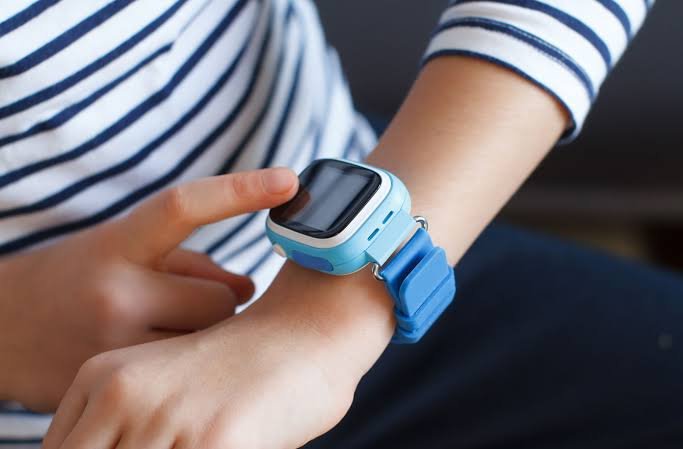
This guide walks you through building a family safety plan step by step, then explains where a children’s GPS tracker watch genuinely helps, and where it does not.
Why children need a plan, not just warnings
“Don’t talk to strangers” is the safety advice most of us grew up with. It is well meant, but it is not very useful. Children meet strangers every day: shopkeepers, bus conductors, new teachers. And in an emergency, a stranger, such as a security guard or a mother with children, is often exactly who a child should approach.
Children respond far better to clear, rehearsed actions than to vague fears. A plan gives them a script. When adrenaline kicks in, scripts are what people of every age fall back on.
Step 1: Build the family contact circle
Decide, as parents, who the trusted adults are. Typically this includes both parents, one or two grandparents, a close relative who lives nearby and a trusted neighbour.
Write down their numbers and make sure your child knows at least one parent’s number by heart. Even with a watch on the wrist, a memorised number is the backup that never runs out of battery.
Step 2: Choose a family code word
A code word is a simple word or phrase that only your family knows. If anyone ever tries to pick up your child saying “Your mother sent me,” your child asks for the code word. No code word, no going anywhere.
Choose something memorable but not guessable, such as an unusual fruit, a pet’s name from years ago, or a made-up word. Change it if it is ever used or shared.
Step 3: Teach the “safe adult” rule
Instead of “never talk to strangers”, teach children which strangers are safe to approach if they need help:
- A uniformed police officer, security guard or shop employee behind a counter.
- A mother or grandmother with children.
- A ticket counter or information desk at stations and malls.
And teach the opposite: never go anywhere with someone, even someone they know, without checking with a parent first.
Step 4: Rehearse the “lost” routine
Practise this at home, then in a mall or park:
- Stop where you are. Moving makes it harder to be found.
- Call a parent using the watch or ask a safe adult to help.
- Stay visible, near a counter, gate or bright landmark.
- Never leave the place with anyone who is not on the family list.
Run a short practice every few months. Children forget quickly, and confidence comes from repetition.
Step 5: Plan the school day
Most worrying moments happen around school: late pickups, changed routes, extra classes.
- Agree who is picking up on which day, and tell your child.
- Tell the school in writing who is authorised to collect your child.
- Teach your child that if no one comes, they stay inside the school gate and inform a teacher or the guard.
- Note the school van or bus driver’s number in your phone and, where possible, in your child’s approved contacts.
Step 6: Know the national helplines
Every family member should know India’s single emergency number, 112, which connects to police, fire and ambulance services. For children specifically, 1098 is the national child helpline. Older children should know both numbers and when to use them.
Step 7: Prepare for health emergencies
Make sure grandparents and caregivers know your child’s allergies, regular medicines and paediatrician’s number. Keep a small medical card in your child’s school bag. If your child has a condition such as asthma, share the action plan with the school nurse and class teacher.
Where a children’s GPS tracker watch fits in
Technology does not replace any of the steps above. What it does is make each of them faster and more reliable.
- It speeds up the “call” step. A child who can press one button on their wrist reaches a parent in seconds, without needing to borrow a phone.
- It answers “where” instantly. Live location, ideally using several satellite systems for better accuracy in crowded places, tells you where your child is while you are on the phone with them.
- It shows you the surroundings. Video calling, especially with a rear camera, lets your child show you exactly where they are, which is incredibly useful when they cannot describe it.
- It provides context after the fact. A location history helps you understand what happened if your child took an unexpected route or got delayed.
- It keeps strangers out. Approved-contact calling and unknown-number blocking mean the watch cannot be used by strangers to reach your child.
- It can include an SOS function. On models that offer it, an SOS feature lets a child alert parents quickly in an emergency.
What a tracker watch cannot do
It cannot replace supervision for young children in crowded places. It cannot teach judgement. It needs charging, a working SIM and a signal. That is why the plan comes first and the watch supports it.
Bringing the plan together: a one-page family safety sheet
On one sheet of paper, write down your trusted contact circle, your code word (keep this sheet private), your safe-adult rules, the “lost” routine, school pickup arrangements, emergency numbers (112 and 1098) and your child’s medical details. Put a copy on the fridge and share the relevant parts with grandparents and caregivers.
Choosing the right watch to support your plan
Look for a watch built specifically for children rather than a shrunk-down adult device. imoo is a brand that focuses entirely on kids’ watch phones, with features designed around family safety rather than entertainment. Its Z7 is a capable children’s GPS tracker watch: it uses five satellite navigation systems (GPS, BeiDou, GLONASS, Galileo and QZSS) for accuracy in crowded environments, keeps a 14-day location history, offers SOS, and has front and rear cameras so a child can show parents exactly where they are during a video call. It also blocks calls from unknown numbers and has no open internet or social media.
It also includes health monitoring features such as temperature and heart-rate tracking. These are useful reference indicators for parents, though, like all consumer wearables, it is not a medical device and should never replace a doctor’s advice.
The bottom line
The safest children are not the ones with the most gadgets. They are the ones who know exactly what to do, who to call and where to go when something goes wrong. Spend one evening this December building your family safety plan, practise it together, and let the right technology make every step of it a little faster. That combination is what turns parental worry into everyday confidence.